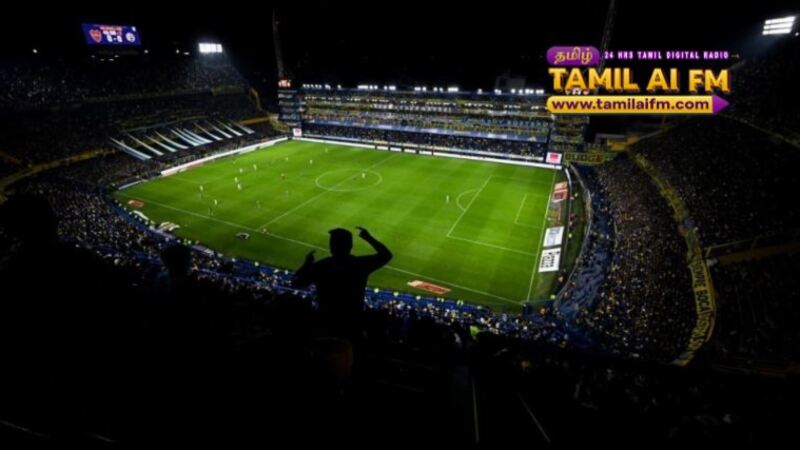
BUENOS AIRES — With eight trophies up for grabs from next year, a first division counting 30 teams and formats that can change seemingly on a whim, the Argentine league is at risk of alienating supporters in the home of the reigning World Cup winners.
Already somewhat of a rarity to outsiders with its two-stage season — each half lasts six months and they are known as the Apertura and Clausura (opening and closing) championships, respectively — the league has recently become even more singular.
The Argentine Football Association (AFA) suddenly decided on Thursday to create a new title combining the clubs’ results in both championships — despite the fact that there was no provision for this in the regulations at the start of the season.
As a result, former Real Madrid and Manchester United attacker Angel Di Maria and his current club, Rosario Central, were unexpectedly declared champions of Argentina just as they were preparing for their last-16 clash in the Clausura play-offs.
The newly-crowned champions promptly lost the knockout tie 1-0 at home to Estudiantes on Sunday.
But nevertheless, the AFA had rewarded Rosario Central for being the team with the most points in the standings, which combine the points from its two half-yearly championships.
These consist of 30 teams divided into two groups with both ending with a knockout phase.
It does not stop there, however.
On top of these titles, there are also the cups and super cups, and the AFA has elected to add even more to the mix.
On Thursday, it announced the creation of a new competition for next season, the Recopa de Campeones, which will feature the winners of the Copa Argentina, the Supercopa Argentina and the Supercopa Internacional.
This means that a total of eight titles will be up for grabs in 2026 in Argentina’s top flight.
But not all in the homeland of Lionel Messi, Diego Maradona and Daniel Passarella are amenable to these changes.