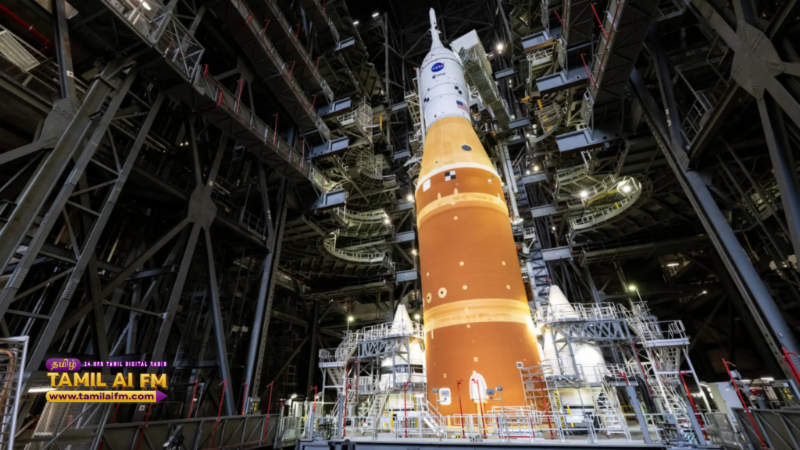
NASA has officially cleared the final flight trajectory for the Artemis II mission, marking a historic milestone as humanity prepares to return to lunar orbit for the first time in over 50 years. Following a comprehensive safety review completed today, March 13, 2026, engineers confirmed that the Orion spacecraft and the Space Launch System (SLS) rocket are in peak condition for the ten-day mission. This mission will carry a crew of four astronauts—including the first woman and person of colour to fly to the Moon to test critical life support systems in deep space.
The mission is strategically scheduled to launch in late April 2026, acting as the final stepping stone before the ambitious Artemis III lunar landing. Today’s approval includes the "free-return trajectory" plan, which ensures that the spacecraft can safely return to Earth using lunar gravity even in the event of a primary engine failure. International partners, including the European and Canadian Space Agencies, have lauded the milestone, noting that the data gathered during this flight will be essential for building the future Gateway station in lunar orbit.
Global interest in the mission has reached a fever pitch, with NASA today launching a new digital tracking platform that allows the public to view real-time simulations of the flight path. Educational institutions worldwide are integrating the mission’s milestones into their science curricula to inspire a new generation of explorers. As the countdown to April begins, the Artemis II mission stands as a powerful symbol of international cooperation and technological advancement amidst a challenging global geopolitical landscape.