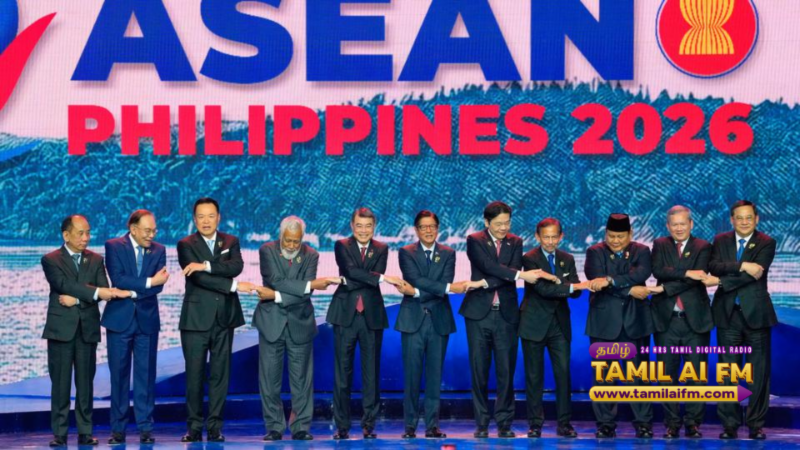
Leaders of the Association of Southeast Asian Nations (ASEAN) concluded their 48th summit in Cebu, Philippines, today, issuing a unified call for peace in the Middle East and a reopening of the Strait of Hormuz. The bloc adopted several key accords during the two-day summit, including new regional agreements on climate change, maritime cooperation, and artificial intelligence. Philippine President Ferdinand Marcos Jr. and other leaders emphasized that regional unity is the only way for Southeast Asia to remain resilient against global economic shocks and uncertainty.
Despite the focus on broad cooperation, President Marcos expressed growing frustration over the lack of progress regarding the 5-point consensus on the Myanmar crisis. To bolster future regional stability, ASEAN leaders also backed a new fuel-sharing pact and a regional power grid to mitigate the impact of global energy supply chain disruptions. For the first time in nearly 20 years, the bloc also moved to rewrite the ASEAN Charter to modernize its decision-making processes for a more innovative and dynamic regional body.
The summit served as a critical platform for bilateral meetings, with leaders discussing enhanced security and economic cooperation, particularly in the South China Sea. The Philippines also confirmed it would host a new regional maritime center to coordinate patrols and safety in disputed waters. Outside the meeting rooms, First Lady Liza Araneta Marcos showcased Filipino culture to the spouses of ASEAN leaders, reinforcing the "soft power" and cultural ties that bind the diverse member nations.