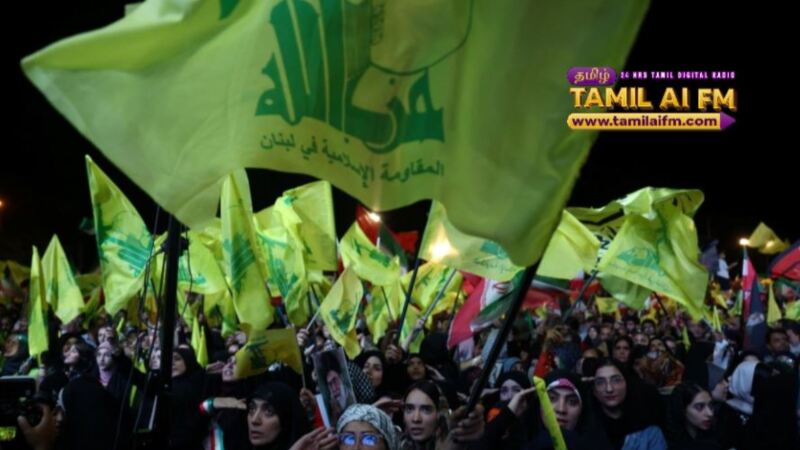
BEIRUT — The war between Israel and the Iran-backed Hezbollah has devastated swathes of Lebanon, though a partial de-escalation agreement announced on Monday has averted renewed airstrikes on the capital Beirut for now.
Israel seeks to end the threat posed by Hezbollah rocket fire and force the group to disarm but Iran wants an end to the Israeli campaign in Lebanon as part of any settlement with the United States to reopen the Strait of Hormuz.
What are Hezbollah’s origins?
Iran’s Revolutionary Guards founded Hezbollah in 1982 during Lebanon’s 1975-90 civil war, part of Tehran’s effort to export its 1979 Islamic Revolution and fight Israeli forces that had invaded Lebanon in 1982.
Hezbollah runs its own social services, including schools and hospitals, and has solid backing among Lebanon’s Shiah Muslims.
Together with its ally, the Amal Movement, Hezbollah dominates the representation of Shiahs in Lebanon’s sectarian ruling system in parliament, the cabinet and other posts.
How did it become so powerful?
While other groups disarmed after Lebanon’s civil war, Hezbollah kept its weapons to fight Israeli forces occupying the predominantly Shiah Muslim south. It retained its arsenal even after Israel withdrew in 2000.
In 2006, during a five-week war, it fired thousands of rockets into Israel. The war erupted after Hezbollah crossed into Israel, kidnapping two soldiers and killing others.
Hezbollah’s arsenal grew after 2006. The US Central Intelligence Agency’s World Factbook said it was estimated to have as many as 150,000 rockets and missiles in 2020 and in 2022 was estimated to have 45,000 fighters.
Hezbollah’s veteran leader Hassan Nasrallah, killed by Israel in 2024, said the group had 100,000 fighters.