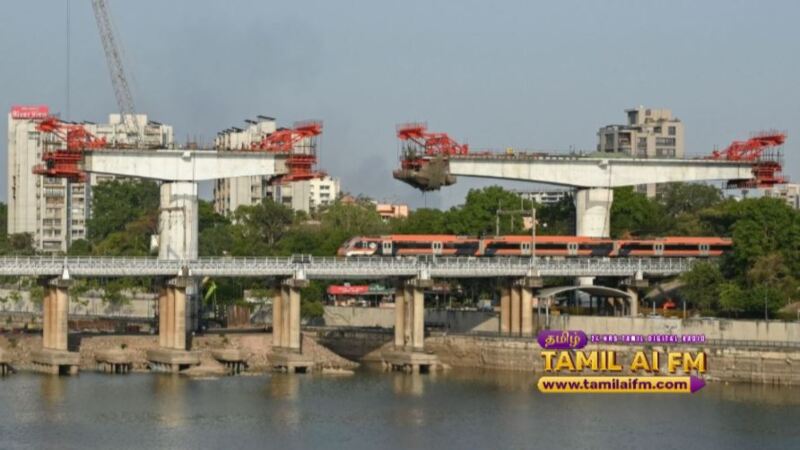
NEW DELHI — India is finally on track to open a section of its long-delayed first high-speed bullet train line in 2027, railway ministry officials say, almost a decade after work began.
New Delhi hopes what it calls “a major milestone in India’s railway modernisation efforts” will serve as a springboard for a wider national electrified high-speed rail network.
“The knowledge, skills and capabilities developed through the project are expected to support future high-speed rail corridors across the country,” the government’s plan reads.
The first 508-kilometre line is being built along its west coast, the Mumbai-Ahmedabad High Speed Rail Corridor.
“A considerable amount of work on the entire corridor has already been completed,” Dharmendra Tewari, Indian Railways additional director general, told AFP.
“The first section of the bullet train will be operational in 2027, between the cities of Surat and Vapi,” he added.
Surat, the global diamond cutting centre, and Vapi, known for its chemical and manufacturing industries, are about 100 kilometres apart.
The project has been a long time coming, mired in cost overruns and delays.
The much-vaunted project, using Japanese “Shinkansen” technology, was launched in 2017 by then-Prime Minister Narendra Modi and his Japanese counterpart Shinzo Abe – and was originally planned to be completed by 2023.
Abe’s protege and current premier Sanae Takaichi is due in India for a three-day visit from Wednesday.
The government says the project will cost US$17 billion, funded by an 81 per cent loan from Tokyo, via the Japan International Cooperation Agency (JICA).