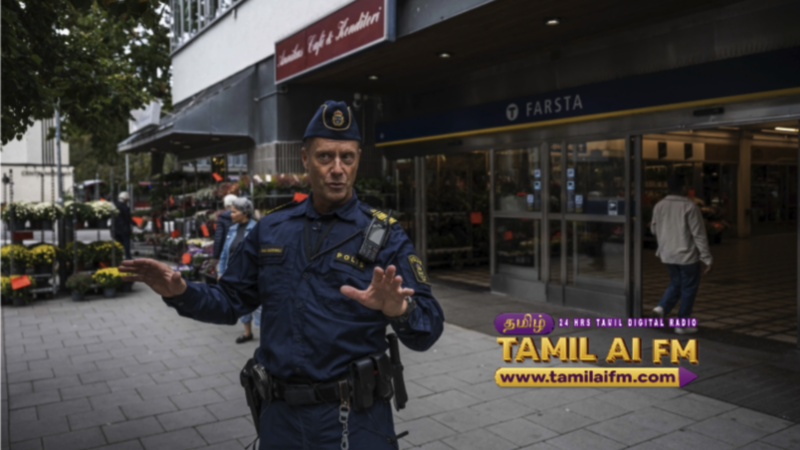
FARSTA — “Good job!” Outside Stockholm’s Farsta subway station where a 2023 shooting killed two innocent bystanders, locals thank Max Akerwall and his police team for turning the tide on gang violence.
An otherwise tranquil country, Sweden has endured over a decade of brutal attacks by organised crime networks, featuring automatic weapons, grenades and explosives, sometimes in broad daylight.
An almost daily occurrence a few years ago as the networks battled over the drugs market, the violence has decreased significantly.
“Sweden was experiencing a wave of violence in 2022 and 2023,” said Akerwall, police commissioner for Stockholm’s southern district, recalling the peak of deadly shootings and bombings.
“But we’ve managed to reverse the trend,” he told AFP, the relief almost tangible in his voice.
In January-June this year, eight people were killed and 15 wounded in 39 shootings, down from 34 killed and 49 wounded in 205 shootings in the same period in 2022, according to police.
Bombings have come down from 108 in January-June last year to 75 this year.
Akerwall credits the turnaround to measures introduced by Prime Minister Ulf Kristersson’s right-wing government, in power since 2022.
It has promised to pursue its crackdown if re-elected in Sunday’s general election.
The left-wing opposition is also in favour of maintaining the hard line.
“In the past four years we’ve gotten many new tools, with new legislation,” Akerwall said.
Tougher sentences for gun possession have been “a game changer”, he said, as have expanded police powers, new surveillance tools, broader international cooperation and more information-sharing between authorities.