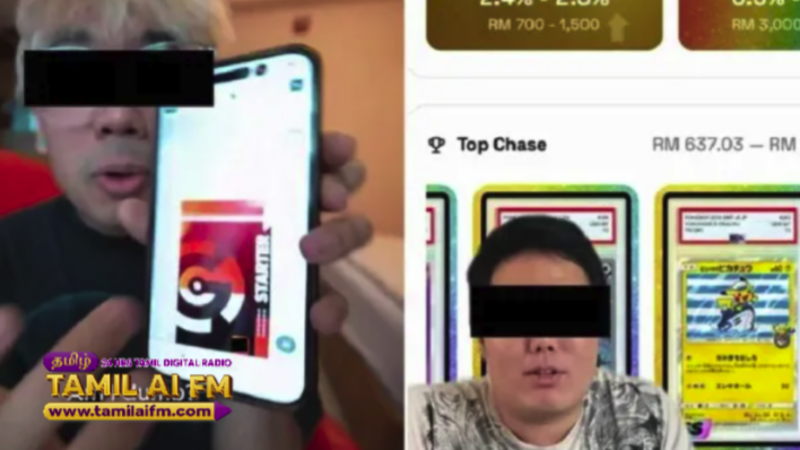
SINGAPORE — Several content creators in Singapore have been promoting a gambling site operating under the guise of a Pokemon trading card platform.
Since September, at least 10 influencers have posted videos on their social media pages promoting the website of the operator based in Malaysia.
The influencers include a former talent from local platform SGAG and an actress who was previously on Crimewatch.
The Straits Times (ST) is not naming the operator to prevent more people from using the site, which features mystery box gambling mechanics that flout Singapore’s remote gambling laws.
Users are offered virtual packs containing a virtual trading card, which the operator claims corresponds with an actual physical card.
These are known as Oripas (original packs), which are seller-made blind packs marketed as a low-cost chance at high-value cards.
Sellers often repack cards of varying values into blind mystery packs sold at a premium, with claims of high-value chances that are difficult to verify. Ultimately, buyers often end up with cards worth far less than what they paid.
ST has reported on the rampant proliferation of Oripas in the trading card community here.
The Ministry of Home Affairs (MHA) previously said those who sell Oripas may be committing gambling offences.
In the case of this Malaysian operator, it has set up a page dedicated to Singapore users, selling them virtual Oripas for between 100 and 1,200 credits a pack, with each credit costing S$1 (RM3.19).
It accepts payments via PayNow.
The website shows that in the first week of November, its top user in Singapore spent over 220,000 credits on 1,970 Oripas.
The platform also features a buyback option, where gamblers can immediately sell their prizes back to the platform for credits.
Such a mechanic is banned in Singapore, applying to games at amusement centres and funfairs to prevent gambling inducement.
The platform did not respond to ST’s request for comment.
Under the Gambling Control Act, those who conduct unapproved games of chance and lotteries can be jailed for up to seven years and fined up to S$500,000 for a first offence, with up to 10 years’ jail and up to a S$700,000 fine for a repeat offence.