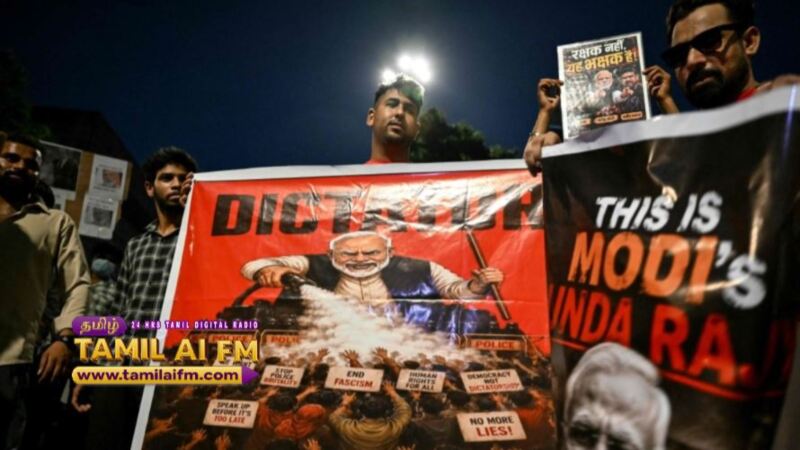
NEW DELHI — When Indian Prime Minister Narendra Modi’s government cut mobile internet services at the site of youth-led protests in New Delhi, students found new ways to stay in touch.
Thousands of young people have been protesting, some camping under tarpaulin in the capital, demanding changes to the education system after a series of irregularities to life-changing exams, including leaks of some papers.
India’s Ministry of Home Affairs issued an order suspending mobile internet services for eight hours on Thursday within 1.5 kilometres (nearly one mile) of the protest site.
The action was needed “in the interest of public order and for preventing incitement to the commission of any offence”, said the document, published on the ministry’s website.
Some students simply switched to Bitchat — a peer-to-peer messaging system that relies on Bluetooth to link people who are nearby into an ad-hoc network without using the internet.
“Many people are using Bitchat,” Kumar Shalabh, 21, said of the open source app developed by American tech entrepreneur Jack Dorsey.
Shalabh is among the many protesters demanding change, and the resignation of the education minister, Dharmendra Pradhan.
He used artificial intelligence services Claude and ChatGPT to seek out new ways to communicate.
“They think we are just part of the internet. Yeah, we know the internet — we also know how to communicate without the internet,” he said.
“They think we are dumb, we are foolish, but actually we are quite smart.”