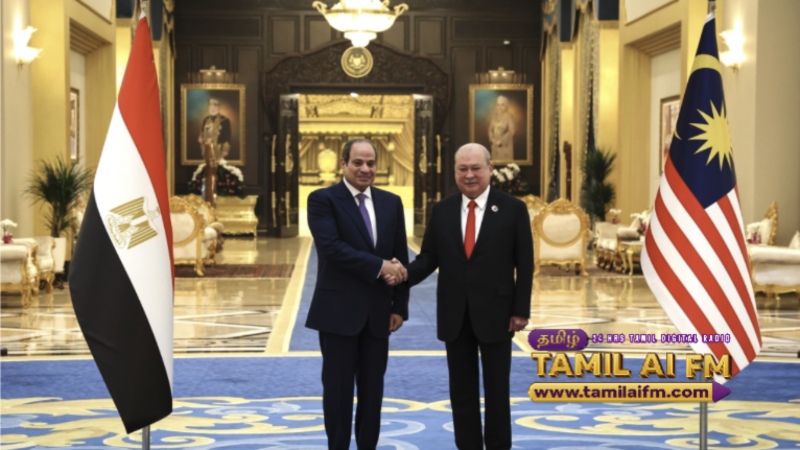
KUALA LUMPUR — Egyptian President Abdel Fattah El-Sisi has reaffirmed Egypt’s support for a two-state solution to the Palestinian issue, with an independent Palestinian state based on the July 4, 1967 borders and East Jerusalem as its capital.
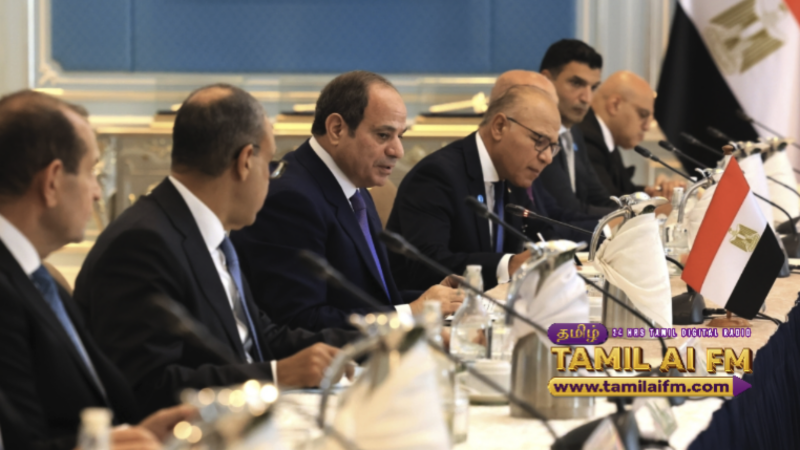
He said the Palestinian issue remained central to West Asia and was among the key matters discussed during his meeting with Prime Minister Datuk Seri Anwar Ibrahim.
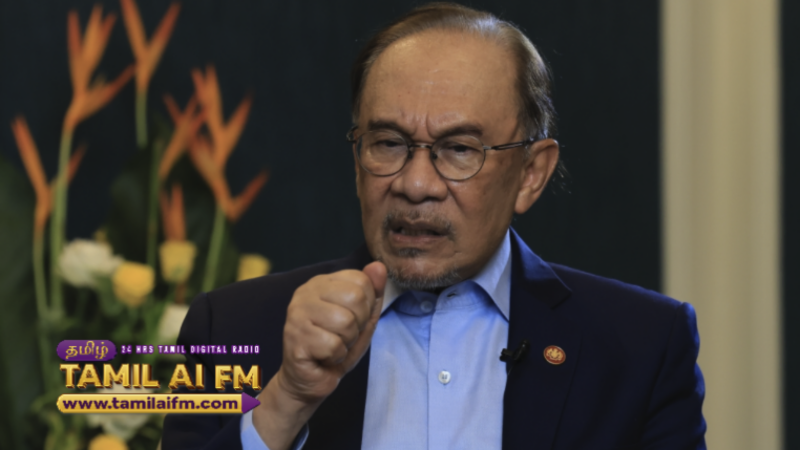
“We stressed together (during the meeting) the necessity for a just and comprehensive settlement according to the international resolutions, and the two-state solution to ensure a Palestinian independent state is established,” he said at a joint press conference with Anwar in Putrajaya today.
El-Sisi also commended Malaysia’s support for the Palestinian people, particularly its humanitarian assistance and efforts to provide medical treatment for injured Palestinians from Gaza.
“I would be remiss if I didn't applaud Malaysia's supporting stance regarding the Palestinian issue and its keenness to provide humanitarian assistance to the Palestinian people and also hosting Palestinian second-injured people to get medical care here in Malaysia,” he said.
On the wider regional situation, El-Sisi said Egypt was making relentless efforts to halt the escalation in West Asia, stressing that collective efforts were necessary to establish peace and uphold international law.
“I would like to seize this opportunity to stress Egypt's relentless efforts to stop the escalation in West Asia,” he said, adding that all parties must work together to establish peace while respecting national sovereignty, territorial integrity, and the principle of non-interference in domestic affairs.
“I just want to confirm here that there is a total convergence between myself and the prime minister regarding the issues of the region and the world, that the political and the diplomatic tracks, respecting international law, are the only way to find lasting and permanent solutions to the crisis in the Gulf,” he said.
He also said that both leaders discussed developments in the Horn of Africa and their potential implications for the wider region.