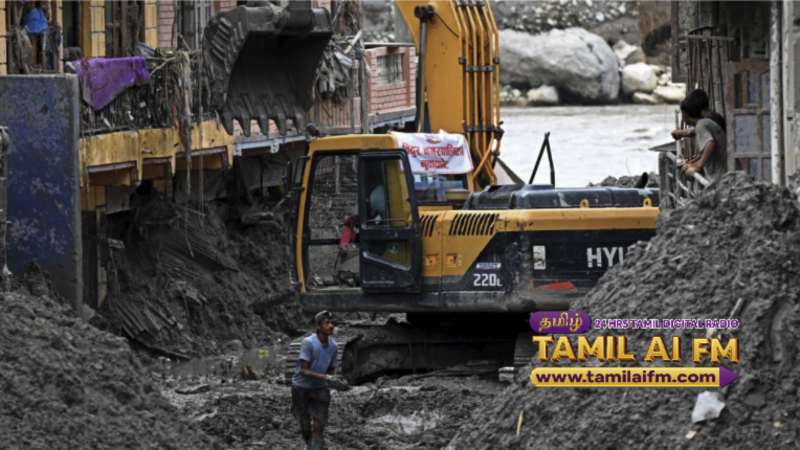
PUTRAJAYA — Malaysia’s third offer to assist Nepal in its search and rescue (SAR) operations for mud flood victims was accepted after two earlier offers were turned down, paving the way for the deployment of the Special Malaysia Disaster Assistance and Rescue Team (SMART), equipped with technical expertise and advanced detection equipment.
SMART commander Senior Fire Superintendent 1 Abdul Manaf Che Isa, who led the mission, said Malaysia initially offered to send 50 rescuers, followed by a second offer of 25 personnel with SAR equipment, but Nepal declined both offers because it already had sufficient rescue teams.
He said Nepal’s government eventually accepted Malaysia’s third offer, which involved deploying just 11 SMART personnel, nine high-capacity drones and specialised detection equipment, after several rounds of discussions.
“Our initial offer was to deploy 50 personnel for SAR operations, but Nepal had already deployed its own rescue teams and declined the offer. The Nepalese government needed specialised equipment and expertise that it lacked.
“At the same time, we did not want to travel there only to find that there was no work for us to do,” he said in a recent interview with Bernama on SMART’s humanitarian mission in Nepal.
According to Abdul Manaf, Nepal declined the first two offers not because it did not need Malaysia’s assistance, but because it had already mobilised enough rescuers, including members of the military, police and fire services, volunteers, and international SAR teams from countries including China and South Korea.
He said SMART’s strengths included high-capacity drones for aerial surveys, mapping disaster-hit areas and locating victims, as well as specialised equipment capable of detecting sounds and movement beneath mud deposits.
“Buildings may be buried beneath mud while their structures remain intact. The area may look clear from above, but this equipment enables us to detect sounds and movement. Such equipment was not available there, and the authorities saw the need for it,” he said.
Abdul Manaf said diplomatic engagement through the Malaysian Embassy in Kathmandu also played a key role in convincing the Nepalese military that SMART could provide the technical assistance needed, including SAR detection equipment, search cameras, satellite phones and specialised communication systems.