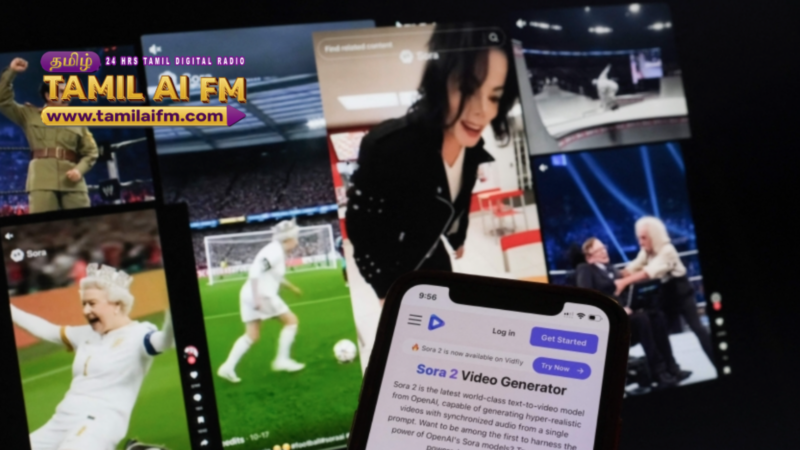
WASHINGTON — In a parallel reality, Queen Elizabeth II gushes over cheese puffs, a gun-toting Saddam Hussein struts into a wrestling ring, and Pope John Paul II attempts skateboarding.
Hyper-realistic AI videos of dead celebrities — created with apps such as OpenAI’s easy-to-use Sora — have rapidly spread online, prompting debate over the control of deceased people’s likenesses.
OpenAI’s app, launched in September and widely dubbed as a deepfake machine, has unleashed a flood of videos of historical figures including Winston Churchill as well as celebrities such as Michael Jackson and Elvis Presley.
In one TikTok clip reviewed by AFP, Queen Elizabeth II, clad in pearls and a crown, arrives at a wrestling match on a scooter, climbs a fence, and leaps onto a male wrestler.
In a separate Facebook clip, the late queen is shown praising “delightfully orange” cheese puffs in a supermarket aisle, while another depicts her playing football.
But not all videos — powered by OpenAI’s Sora 2 model — have prompted laughs.
In October, OpenAI blocked users from creating videos of Martin Luther King Jr. after the estate of the civil rights icon complained about disrespectful depictions.
Some users created videos depicting King making monkey noises during his celebrated “I Have a Dream” speech, illustrating how users can portray public figures at will, making them say or do things they never did.