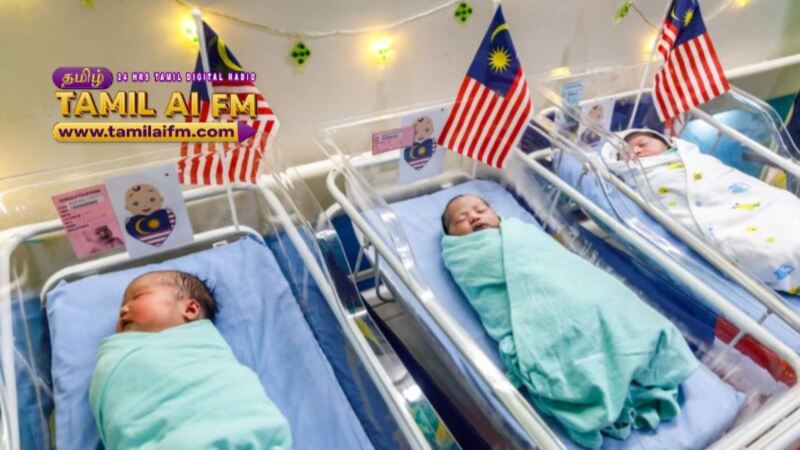
KUALA LUMPUR — Did you know that Malaysia’s laws protect “new born” children that are found abandoned from becoming stateless persons, and enables them to have the right to automatically be Malaysians?
But what is a “new born child”?
The Court of Appeal recently told a woman (identified only as G for privacy purposes) that she was not a “new born” child when found abandoned at around 1am at a bus station in Mentakab, Pahang in December 1997.
A doctor who examined G at that time had estimated she was aged about one year old, while G’s adoptive Malaysian mother’s police report filed two days later said she was approximately one and a half years old when found.
G has since then been adopted and raised by her Malaysian adoptive parents in Malaysia, but the Malaysian government had rejected her citizenship application three times (with her third application in 2014 rejected nearly four years later in 2018).
Now aged 29, G, who does not know who her biological parents are, is still waiting to be recognised and declared as a Malaysian citizen.
Can all abandoned children be protected from statelessness by Section 19B?
Here’s why G lost her citizenship appeal at the Court of Appeal, based on Datuk Faizah Jamaludin’s 20-page full written judgment that was agreed on June 30 by the two other judges on the panel (panel chair Datuk Azhahari Kamal Ramli and Datuk Hayatul Akmal Abdul Aziz):
G had argued that she has the right to be a Malaysian citizen under the Federal Constitution, based on Section 19B of the Federal Constitution’s Part III of the Second Schedule.
Under Section 19B, “any new born child found exposed in any place” shall be presumed to have been born there to a mother who is a permanent resident there, and the date the child was found will be treated as the child’s date of birth.
The Court of Appeal agreed that Section 19B has an “important protective purpose” as it reduces the risk of statelessness for a new born child found abandoned, but said that this should be based on how the Federal Constitution was worded.
While agreeing that G was abandoned as a child, the court said Section 19B “does not apply to every abandoned child” as Section 19B also requires the child to also be “new born”.
The court said it cannot remove the “new born” requirement from Section 19B.