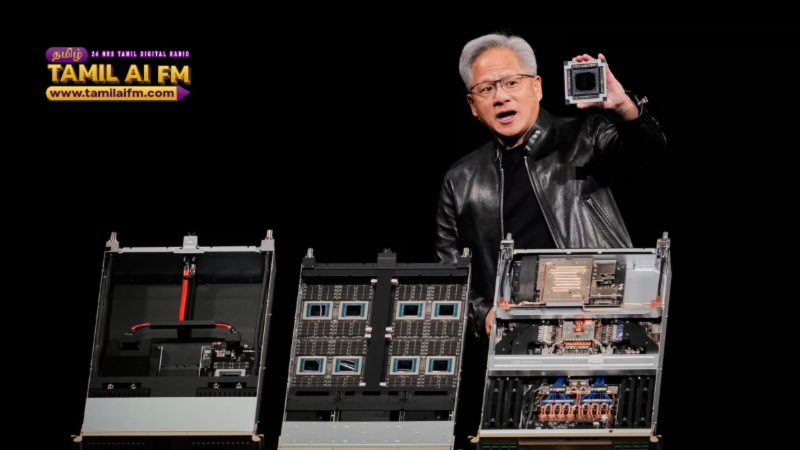
In a major announcement during the GTC keynote speech today, March 17, 2026, Nvidia CEO Jensen Huang projected that the company expects to facilitate over US$1 trillion in chip orders through 2027. This optimistic forecast is driven by the explosive global demand for AI-integrated hardware, which has doubled the company's revenue forecast for its key semiconductor lines. The announcement has immediately sent ripples through Asian tech and auto stocks, with many regional partners seeing significant gains during the morning trading sessions.
Huang’s keynote highlighted the "new industrial revolution" of AI, noting that the world’s data centres are transitioning to a new type of computing that requires massive amounts of specialized hardware. He revealed several new partnerships with global automotive and technology firms, including those in Southeast Asia, to integrate Nvidia's latest AI chips into self-driving cars and humanoid robots. This surge in projected orders reflects a broader market shift where AI is no longer just a luxury feature but a foundational requirement for modern global infrastructure.
Despite the positive outlook, some industry veterans have raised concerns about the sustainability of this growth and the potential for a "chip bubble" if production cannot keep pace with these trillion-dollar expectations. However, investors have largely ignored these warnings today, focusing instead on Nvidia's dominant market position and its ability to lead the AI hardware race. The news has also spurred competitors like Volkswagen to accelerate their own independent EV driver-assist programs as they attempt to balance the need for high-performance chips with long-term technological independence.